Sleep planning guide
What Does Grogginess Mean?
Grogginess means feeling sleepy, mentally foggy, or less alert. Learn how the word differs from tiredness and what morning grogginess can mean.
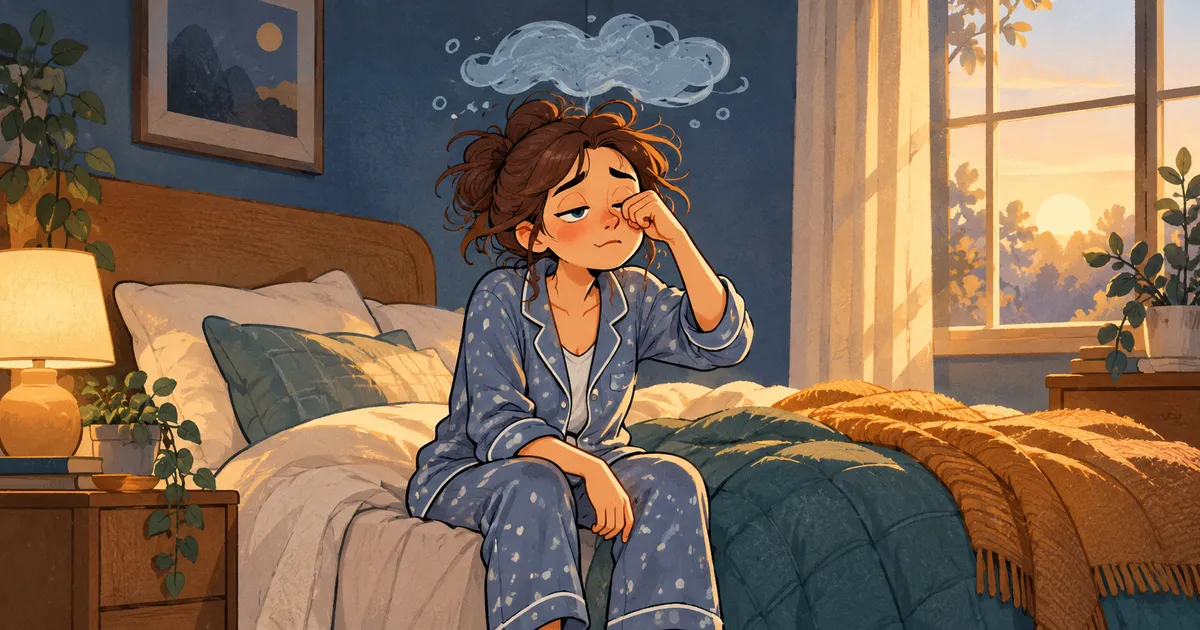
Grogginess means feeling sleepy, mentally foggy, or less alert than usual. Someone who says “I feel groggy” may mean they are awake but still feel slow to think, respond, or get started. It describes a feeling, rather than identifying a particular illness or explaining its cause.
You might use the word after waking in the morning, coming out of a nap, or feeling drowsy at another time. The context matters: a brief feeling after sleep and a pattern of struggling to stay awake throughout the day need different attention.
What does feeling groggy feel like?
People use “groggy” to describe a mixture of sleepiness and reduced mental sharpness. For example:
- You hear your alarm but need a moment to understand what time it is.
- You are awake after a nap but find it hard to concentrate on a conversation.
- You feel slow to get going and want to go back to sleep.
These examples explain everyday usage. They are not a checklist for diagnosing a sleep disorder. Feeling groggy does not, by itself, tell you whether you slept too little, woke from a particular sleep stage, or have a health problem.
Grogginess, sleepiness, and tiredness: what is the difference?
The words overlap in everyday conversation, but they can emphasize different experiences.
| Word | What someone may mean |
|---|---|
| Groggy | Sleepy and not yet mentally sharp or fully alert. |
| Sleepy or drowsy | Feeling a tendency to fall asleep. |
| Tired or fatigued | Feeling low in energy or exhausted, which does not always mean you could fall asleep. |
The NHS distinguishes excessive daytime sleepiness from feeling tired all the time. When describing a problem to a clinician, concrete details are more useful than choosing the perfect word: do you lack energy, struggle to think clearly, or actually fall asleep unintentionally?
What does morning grogginess mean?
Grogginess immediately after waking can be sleep inertia, the temporary transition in which alertness and performance have not fully recovered after sleep. It can happen after a nap as well as after a night's sleep.
NIOSH describes sleep inertia as involving temporary disorientation and slower mental performance after awakening. How strongly it affects you and how long it lasts can vary. There is no single minute at which everyone should feel fully alert.
“Grogginess” is the broader descriptive word; “sleep inertia” refers specifically to the period after waking. Feeling groggy later in the day is not automatically sleep inertia.
For the possible contributors to recurring morning grogginess, including sleep opportunity and disrupted sleep, read why you wake up groggy. That guide also covers practical next steps.
Does grogginess mean you slept badly?
The feeling alone cannot answer that question. A short period of reduced alertness after waking can occur even after a full sleep opportunity. Conversely, spending a long time in bed does not prove that you slept well throughout it.
Notice the pattern instead: when the feeling starts, whether it clears after waking, whether you repeatedly fall asleep unintentionally, and whether it affects your normal activities. Our guide to time in bed versus time asleep explains why a bedtime window and actual sleep duration differ.
A calculator result cannot identify the cause of grogginess or guarantee that an alarm will wake you feeling refreshed. See how accurate a bedtime calculator is before treating cycle-based times as predictions about alertness.
When should you get advice?
Speak with a healthcare professional if you often fall asleep during the day or sleepiness affects your life; these are reasons the NHS recommends seeking advice. Persistent unexplained tiredness also deserves attention, as described in NHS guidance on tiredness and fatigue.
Describe what you experience and when it happens, rather than assuming the word “groggy” explains it. If you suspect a medicine contributes to drowsiness, discuss it with a clinician or pharmacist before changing prescribed treatment. Avoid driving or hazardous tasks when you are sleepy or not fully alert.
Sources
Related blogs

Why Do I Wake Up Groggy?
Understand sleep inertia and other causes of morning grogginess, plus practical steps and signs that deserve professional advice.
- wake up groggy
- sleep inertia
- morning tiredness

Can't Fall Asleep? What to Try When You're Already in Bed
Can't fall asleep? Choose a practical next step for racing thoughts, physical tension, or frustration, with clear exercises and advice on when to get help.
- cannot sleep
- falling asleep
- relaxation
- racing thoughts